


Your browser is out-of-date!
Update your browser to view this website correctly. Update my browser now
Courtesy of Olney Gleason. Photo by Victoria Loeb.
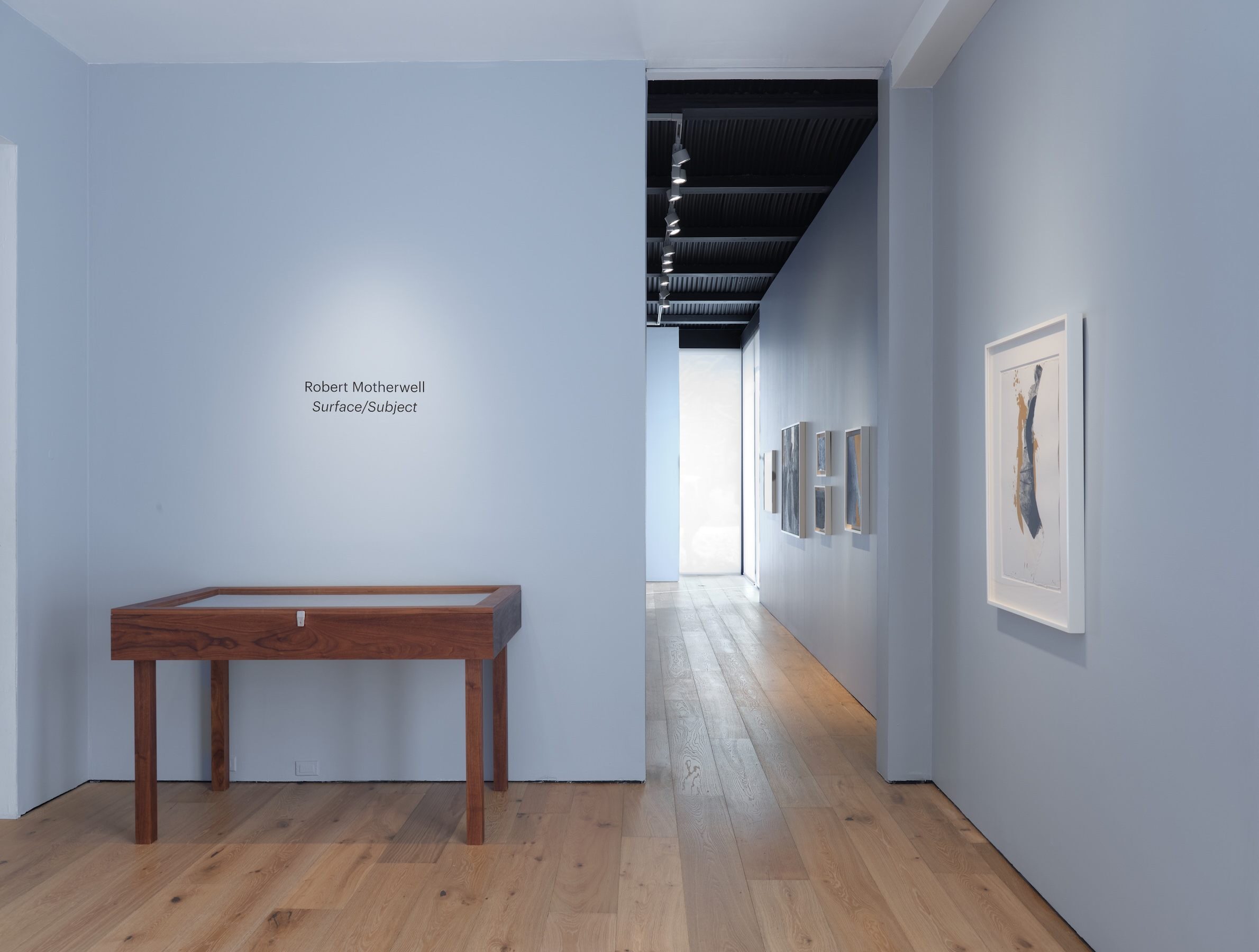
Robert Motherwell: Surface/Subject opened at Olney Gleason in February 2026. The exhibition highlighted Motherwell’s distinctive approach to developing his compositions, through a combination of bold gestures, varied surface textures, and overlapping planes of color.
Across painting, collage, printmaking, as well as other mediums in which he worked, Motherwell animated his surfaces with a wide range of blacks, juxtaposed in areas of varying density. This endowed his oeuvre with enormous force and intensity: the subjects of his paintings emerge in large measure from the dynamism and intricacy of his painting process.
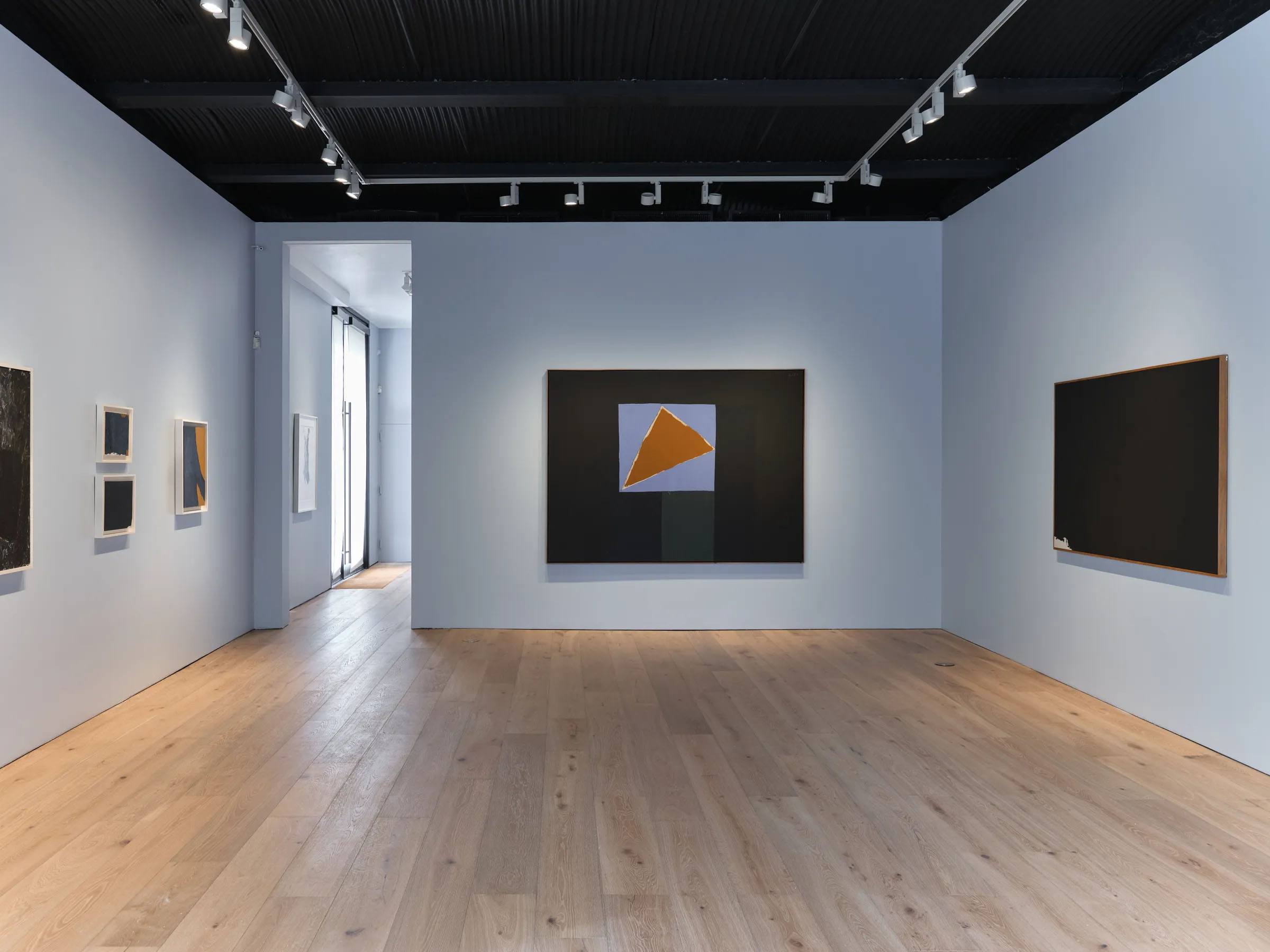
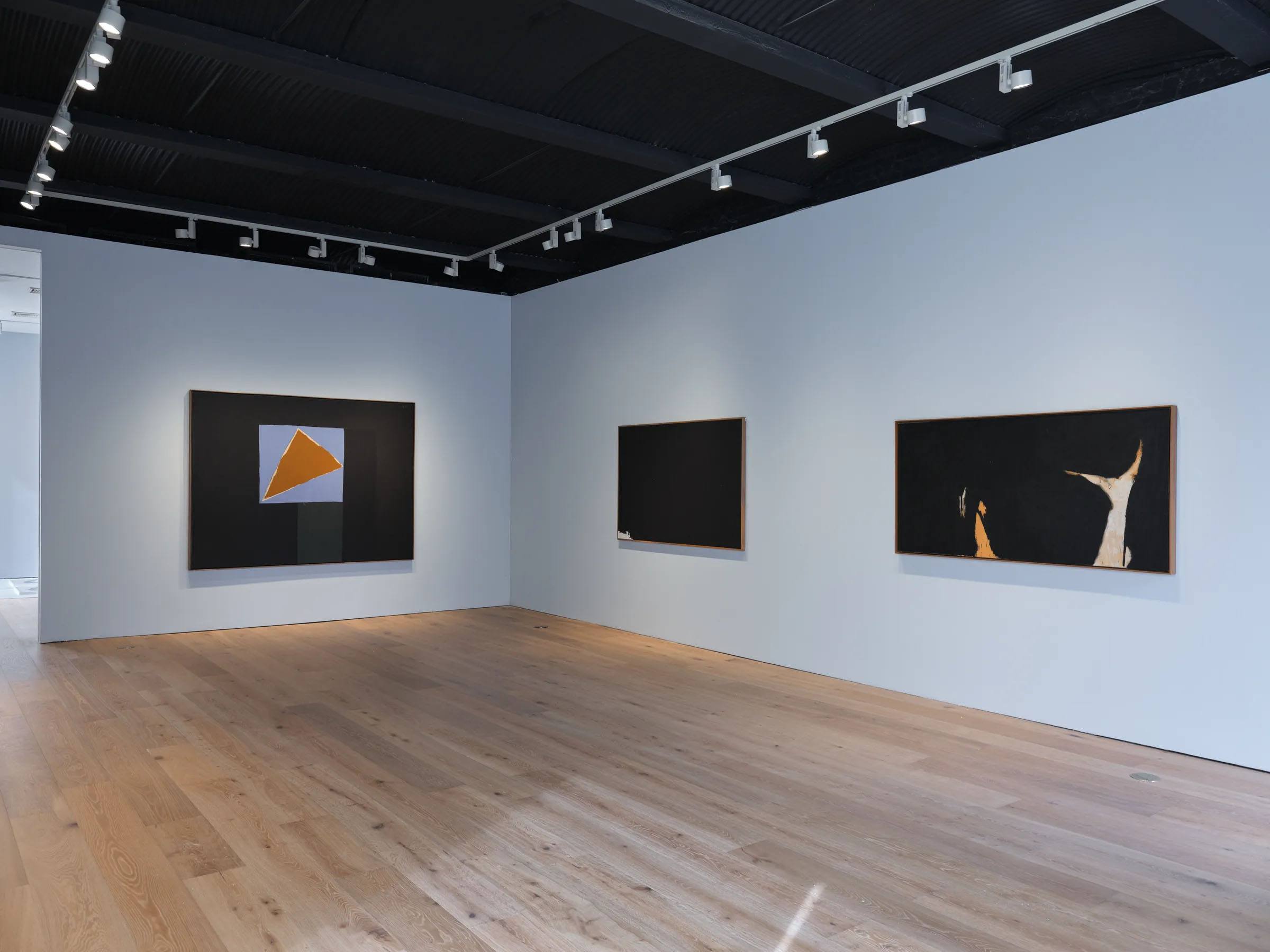
Motherwell often worked on his paintings over extended periods of time, and he used the color black in especially rich and evocative ways – sometimes as a dense single pigment, applied without tonal modulation, and sometimes in translucent veils, which both enshroud and reveal their subjects. An example of this method can be seen in The Forge, 1965-66/1967-68, which Motherwell transformed – repainting the right side in dense black to give greater emphasis to the blue area around the central triangular form – after its debut in the exhibition Two Decades of American Painting at The Museum of Modern Art, 1966-67.
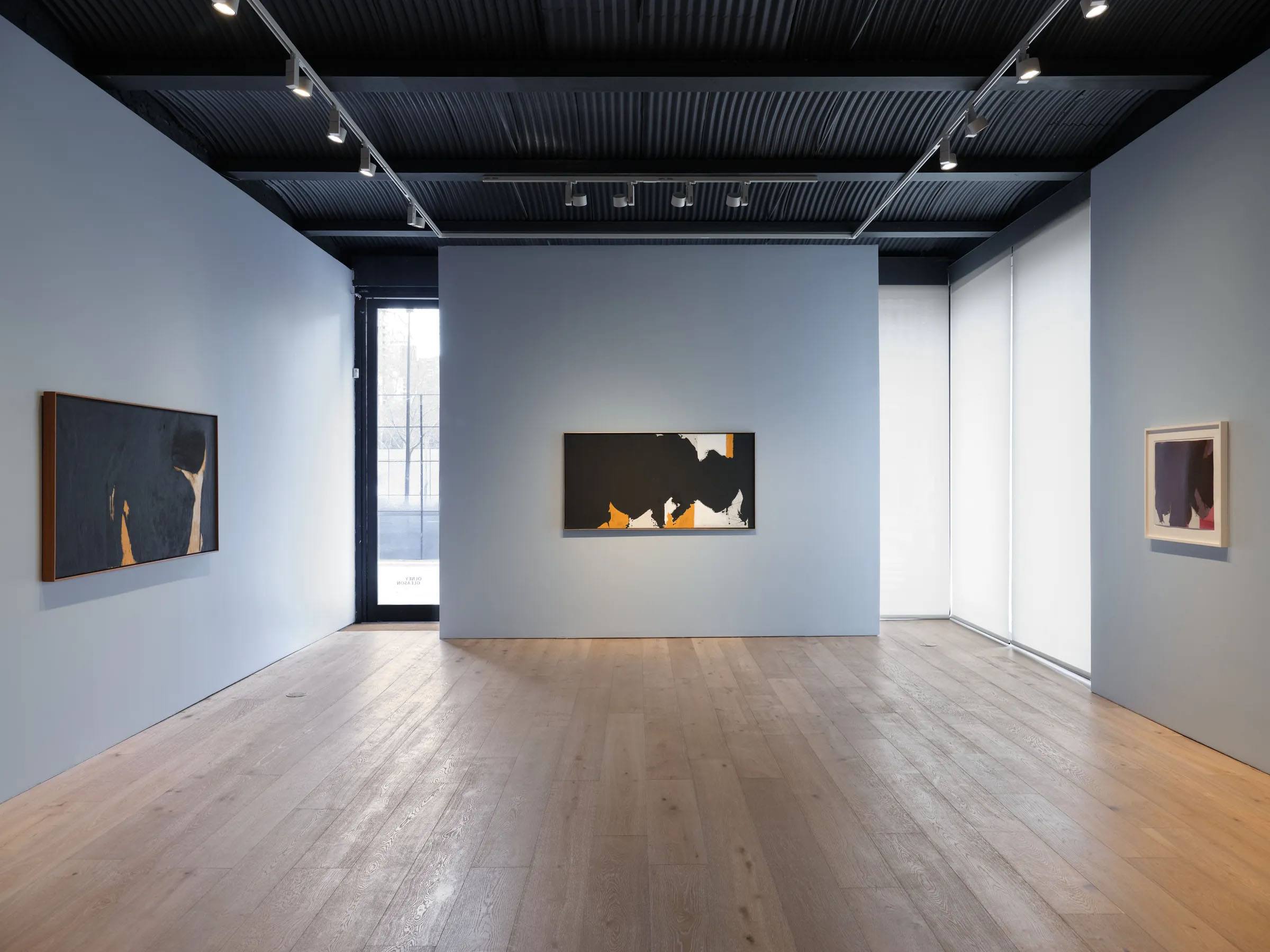
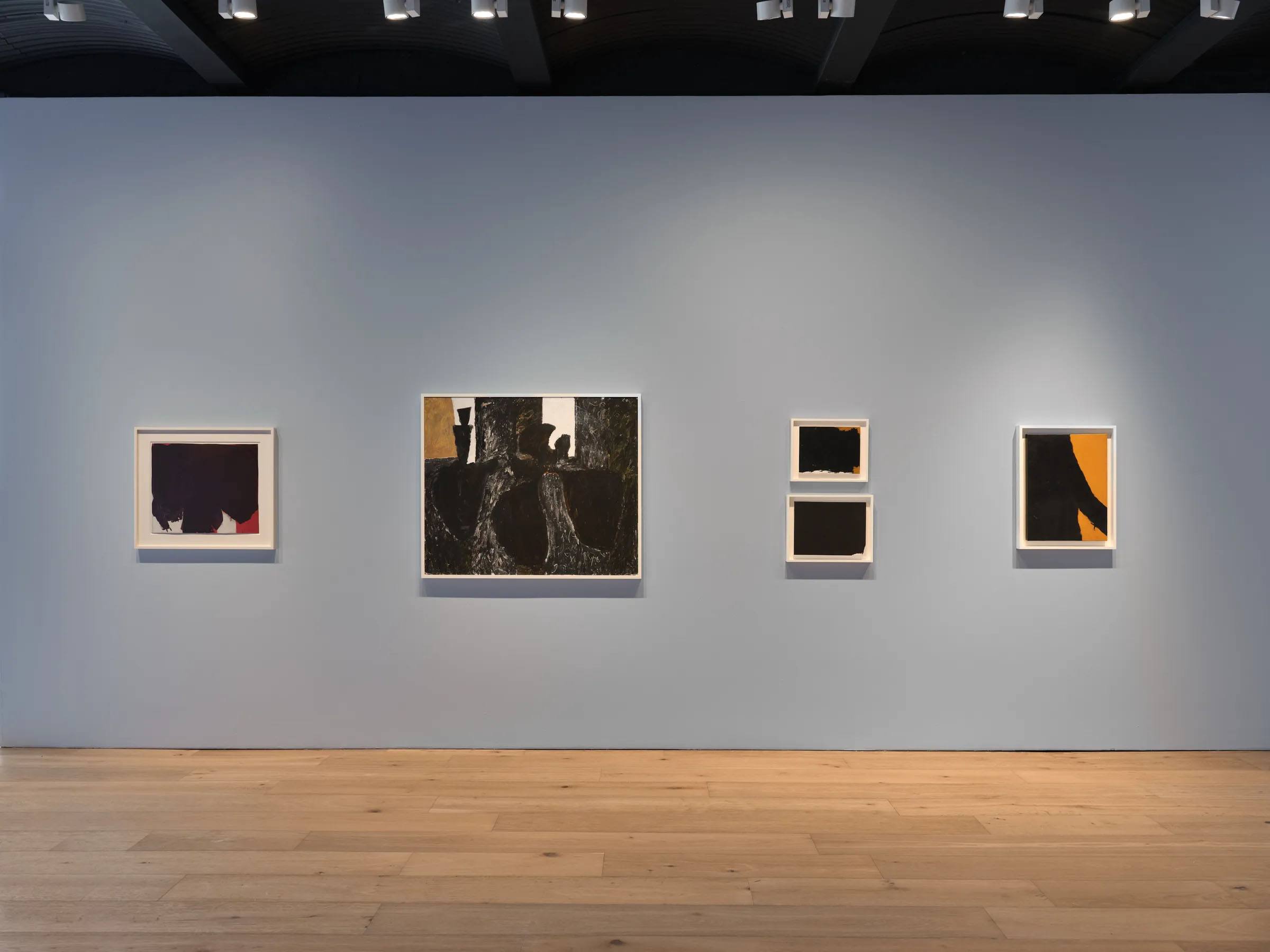
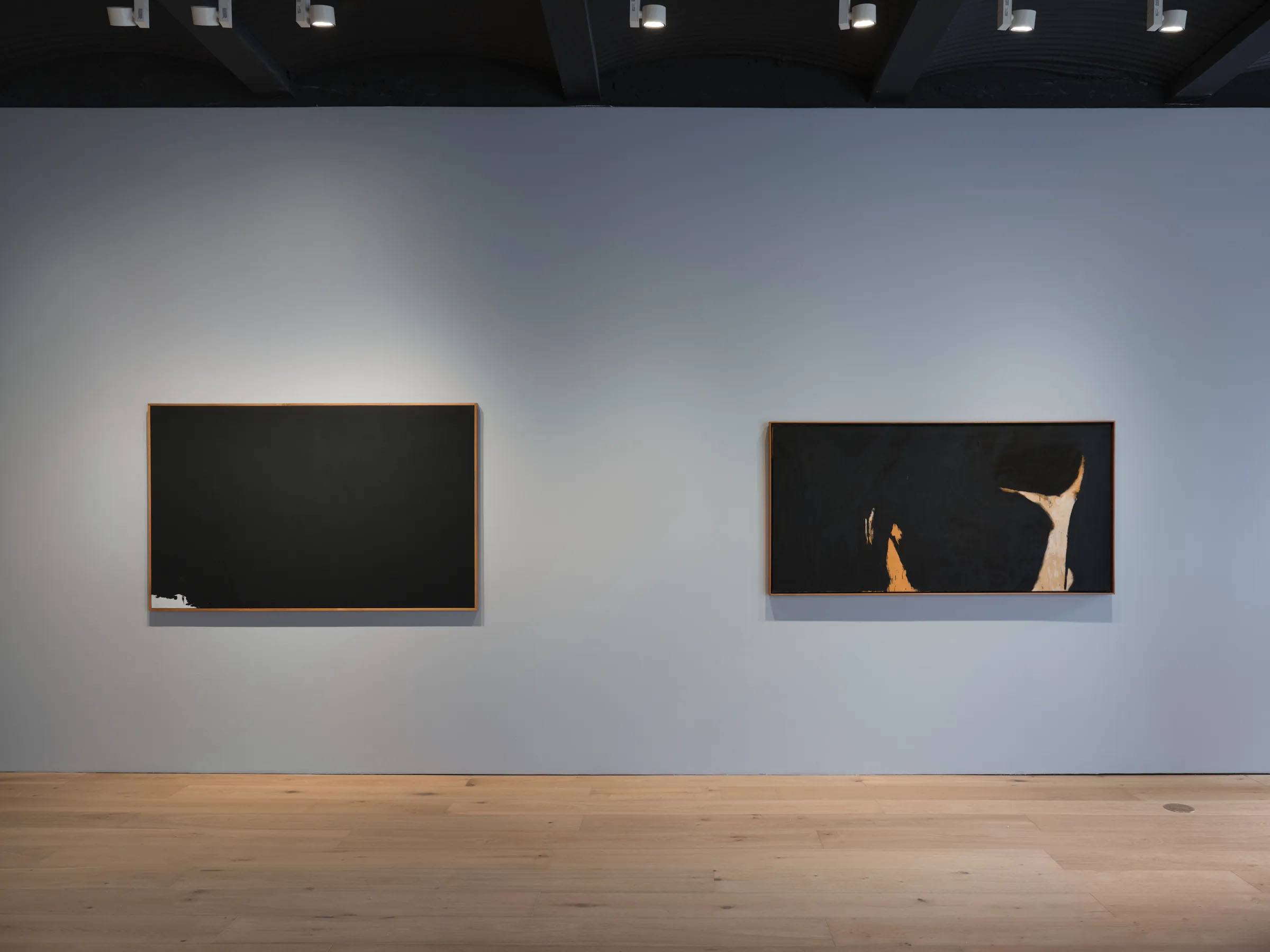
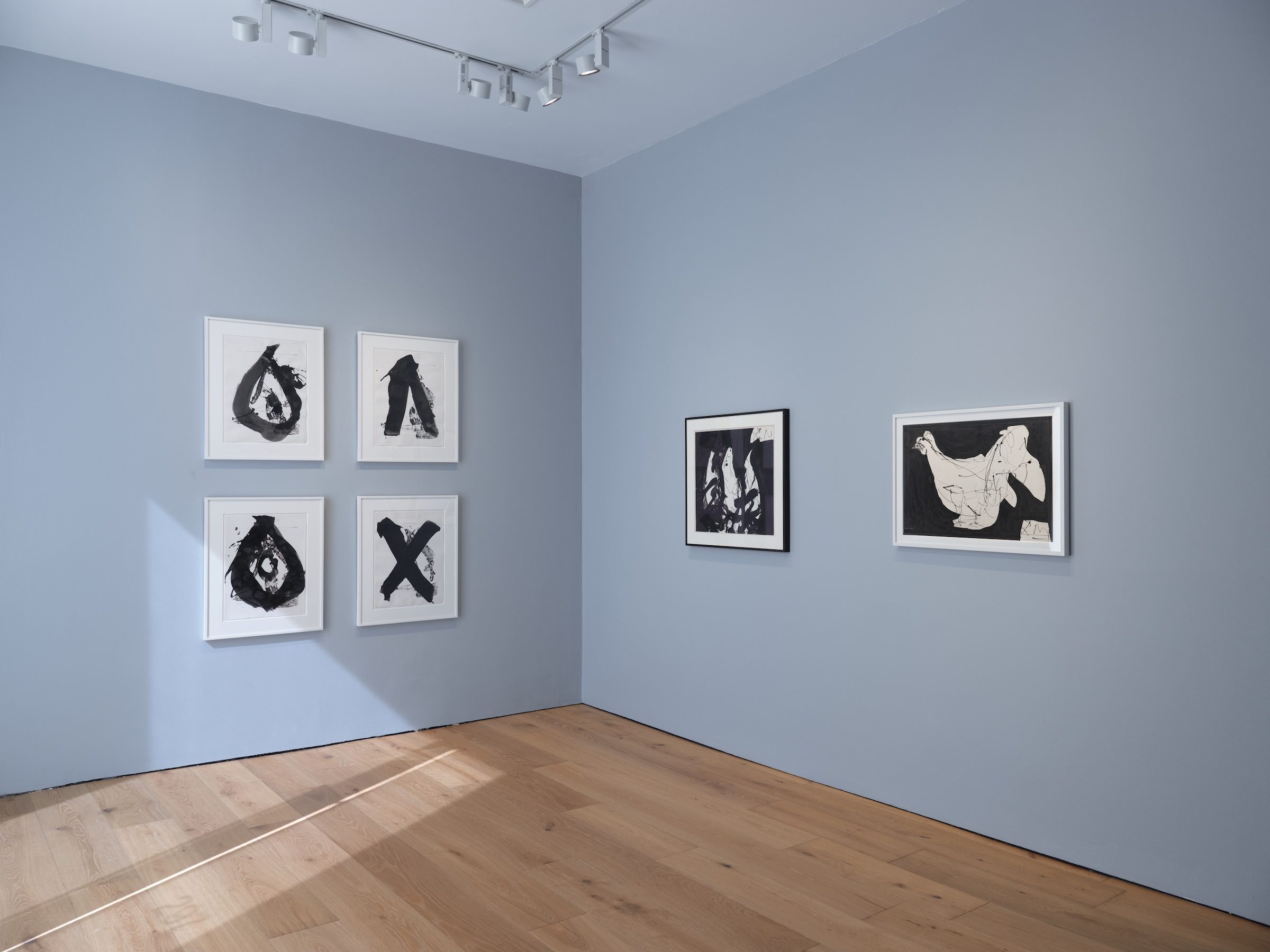
Motherwell’s works mobilized abstraction to register a broad range of both intimate feelings and social consciousness. The personal expression of tension and tragic grief in many of his works is significantly related to his political commitments – particularly his lifelong engagement with the tragedy of the Spanish Civil War, which he identified as a defining moral event of his generation.
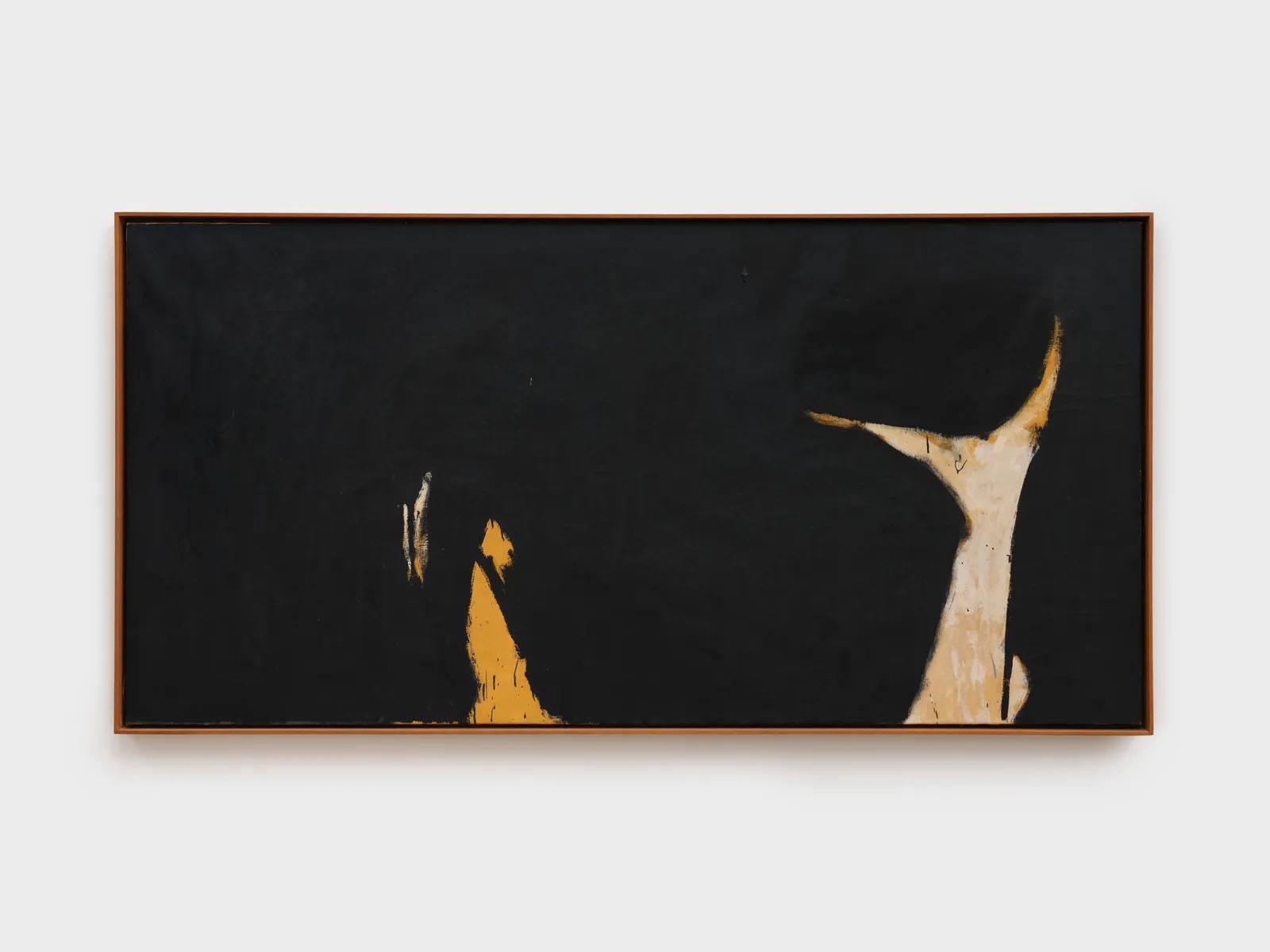
These feelings are vividly expressed in his Elegy to the Spanish Republic series, one of the most iconic bodies of paintings in the post-War era. A significant work from this series, Untitled (Elegy), 1975, which has been in the same private collection for half a century, will be on view in a gallery exhibition for the first time. Spanish Painting with the Face of a Dog, 1958/59/60, is also an especially prominent inclusion in the exhibition. It was shown in Motherwell’s 1965 retrospective at the Museum of Modern Art, which was organized by Frank O’Hara, and it was recently included in the artist’s 2023 retrospective at The Modern Art Museum of Fort Worth, which traveled to the Kunstforum Wien.
The exhibition was accompanied by a new text by London-based writer Matthew Holman, as well as archival images that document Motherwell’s successive returns to individual works.
Related Press:
The Brooklyn Rail: “Robert Motherwell: Surface/Subject”
Public Program
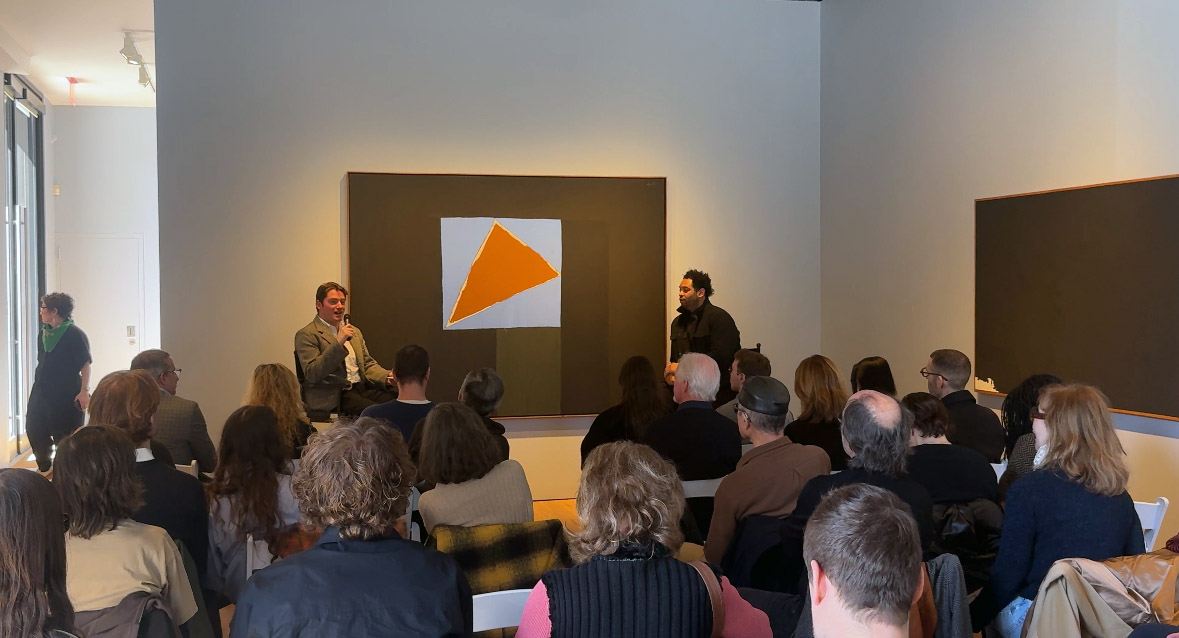
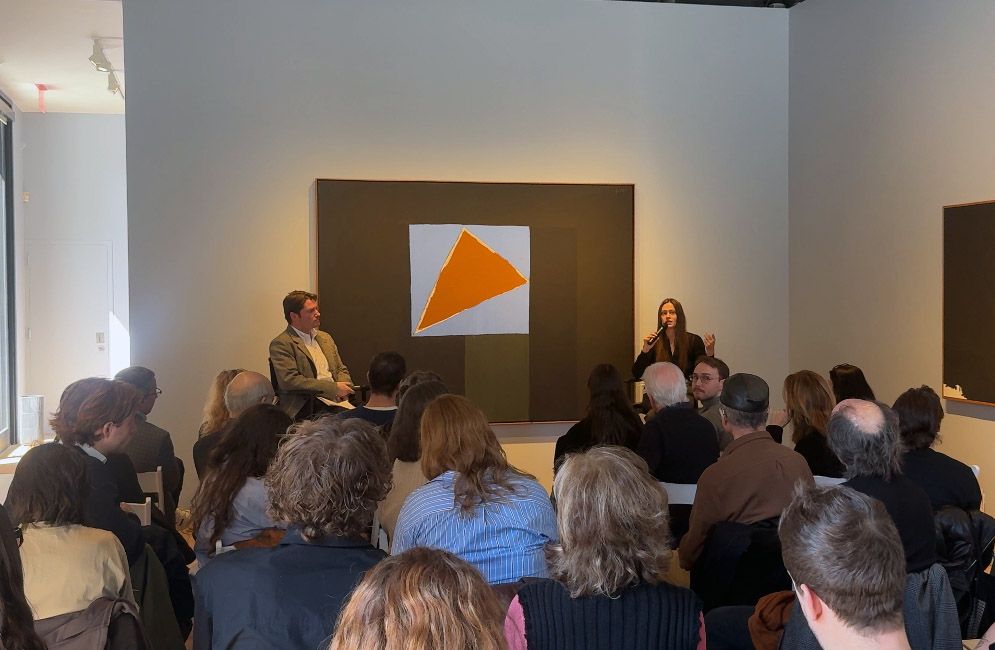
On March 14th, Olney Gleason hosted a two-part public program around Robert Motherwell: Surface/Subject moderated by Matthew Holman. In the first part of the program, art historian and curator Megan Kincaid offered a close reading of Motherwell’s practice, drawing on her research into modernist abstraction and the transnational currents that shaped mid-century American art.
In the second half, artist Tony Lewis joined Holman to discuss his own work in relation to Motherwell’s, which similarly engages questions of gesture and surface through processes of mark-making and concealment.
essay: "Robert Motherwell: A sense of Life"
Matthew Holman’s new essay on Robert Motherwell traces the artist’s practice of revision as a form of meaning-making — from the Elegy to the Spanish Republic series through his works of the late 1950s and ’60s. Drawing on archival correspondence and exhibition histories, Holman argues that Motherwell’s successive reworkings of his canvases were not corrections but acts of sustained confrontation with history, loss, and the limits of abstraction.
Courtesy of Olney Gleason. Photo by Victoria Loeb.
Courtesy of Olney Gleason. Photo by Victoria Loeb.
Courtesy of Olney Gleason. Photo by Victoria Loeb.
Courtesy of Olney Gleason. Photo by Victoria Loeb.
Courtesy of Olney Gleason. Photo by Victoria Loeb.
Courtesy of Olney Gleason. Photo by Victoria Loeb.
Courtesy of Olney Gleason. Photo by Victoria Loeb.
Courtesy of Olney Gleason. Photo by Victoria Loeb.
Courtesy of Olney Gleason.